Medical AI

Medical AI brings together our reporting on machine learning for clinical and biomedical problems, from diagnosis and prognosis to medical image analysis and decision support. Because mistakes in this domain carry a human cost, we pay close attention to evaluation, calibration, uncertainty, and the gap between benchmark numbers and bedside reliability. Expect grounded explainers of recent research rather than uncritical product announcements.

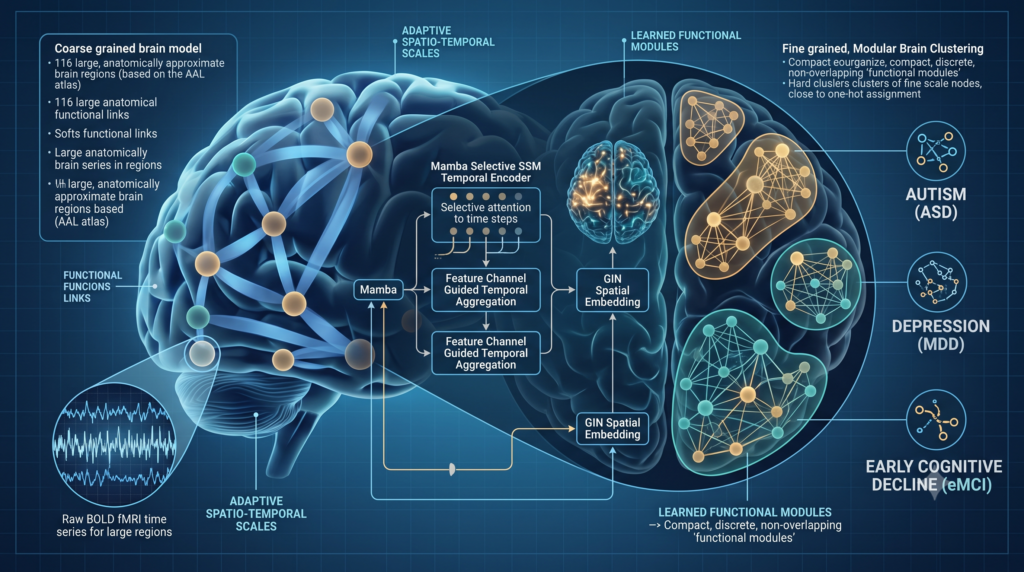
A Model That Learns Brain Networks at Multiple Scales for Autism and Depression Diagnosis

A Model That Learns Brain Networks at Multiple Scales for Autism and Depression Diagnosis

Brain network analysis usually works like this. Take a resting state fMRI scan, split the brain into a fixed number of regions using an anatomical atlas such as AAL with its 116 regions, measure how correlated each region’s activity is…
A Model That Learns Brain Networks at Multiple Scales for Autism and Depression Diagnosis Read More »

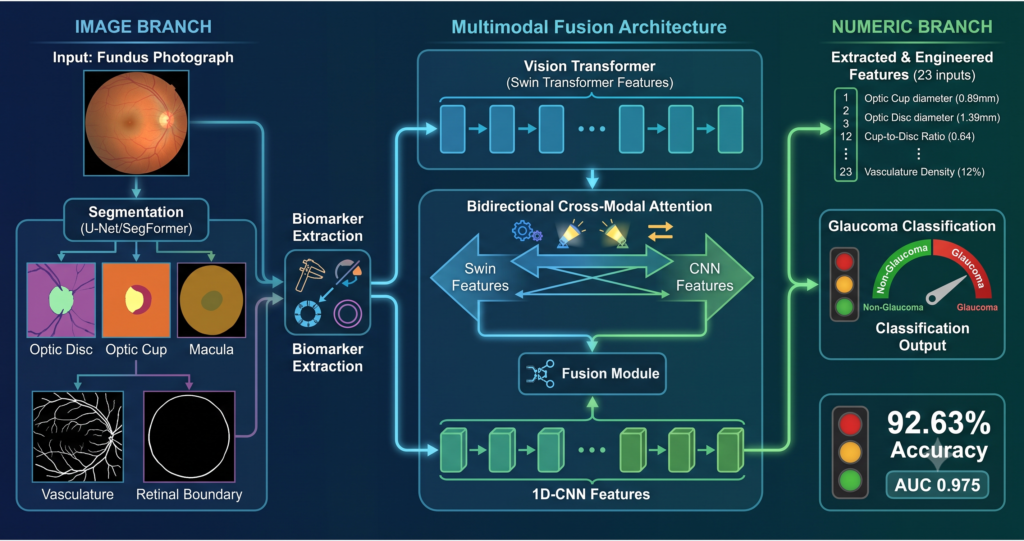
How Multimodal Glaucoma Classification Fuses Segmentation-Derived Biomarkers with Vision Transformer Features

How Multimodal Glaucoma Classification Fuses Segmentation-Derived Biomarkers with Vision Transformer Features

Glaucoma causes progressive damage to the optic nerve and often develops without any early symptoms. This makes early glaucoma detection incredibly vital because existing treatments can only halt or slow down the damage rather than reversing it. Most traditional AI…

How Multimodal Glaucoma Classification Fuses Segmentation-Derived Biomarkers with Vision Transformer Features Read More »

SMMAL: How Semi-Supervised Machine Learning Finally Solves Treatment Effect Estimation from Messy Health Records.

SMMAL: How Semi-Supervised Machine Learning Finally Solves Treatment Effect Estimation from Messy Health Records

A research team from the University of Minnesota and Harvard built a semi-supervised estimator that handles the most realistic and frustrating scenario in real-world health data — when both the treatment a patient received and the health outcome that followed…

SMMAL: How Semi-Supervised Machine Learning Finally Solves Treatment Effect Estimation from Messy Health Records Read More »

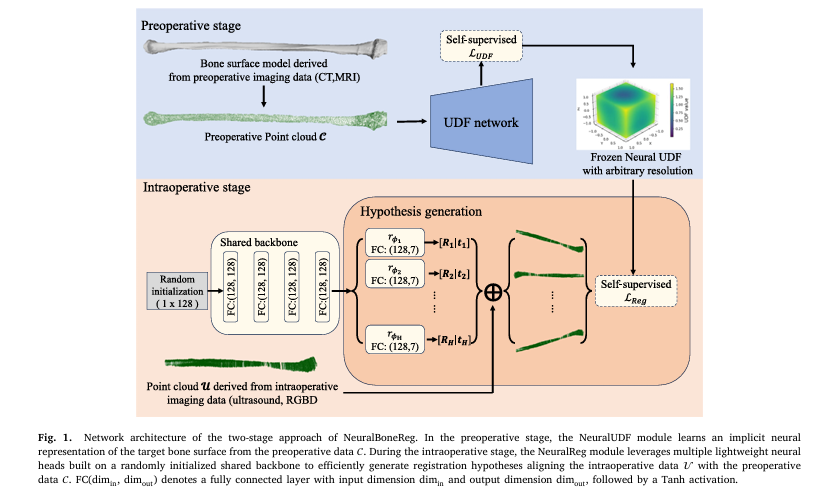
NeuralBoneReg Solved the Hardest Alignment Problem in Robotic Surgery Without a Single Labeled Training Example.

NeuralBoneReg: How a Self-Supervised Neural Framework Solved the Hardest Problem in Robotic Orthopedic Surgery

A team from Balgrist University Hospital and ETH Zurich built an instance-specific self-supervised framework that registers bone surfaces across imaging modalities by learning a continuous neural distance field from the preoperative scan and using thousands of neural hypothesis generation heads…

NeuralBoneReg: How a Self-Supervised Neural Framework Solved the Hardest Problem in Robotic Orthopedic Surgery Read More »