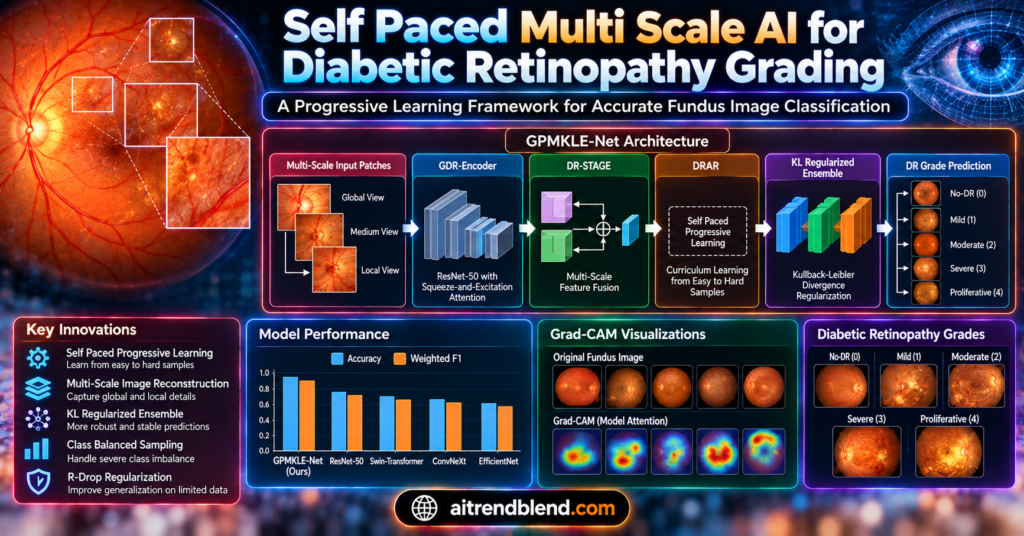
Self Paced Multi Scale AI For Diabetic Retinopathy Grading
This article explains a piece of published research. It is not medical advice, diagnosis, or treatment.
Self Paced Multi Scale AI For Diabetic Retinopathy Grading Read More »

Machine learning sits at the core of everything we cover at AI Trend Blend. This section gathers our research breakdowns, method explainers, and practical analyses across supervised, self-supervised, and generative learning, with a steady focus on the ideas that actually move results rather than the noise around them. You will find work spanning optimization, model architectures, training dynamics, and the theory that explains why modern systems behave the way they do, written for readers who want depth without filler.
This article explains a piece of published research. It is not medical advice, diagnosis, or treatment.
Self Paced Multi Scale AI For Diabetic Retinopathy Grading Read More »
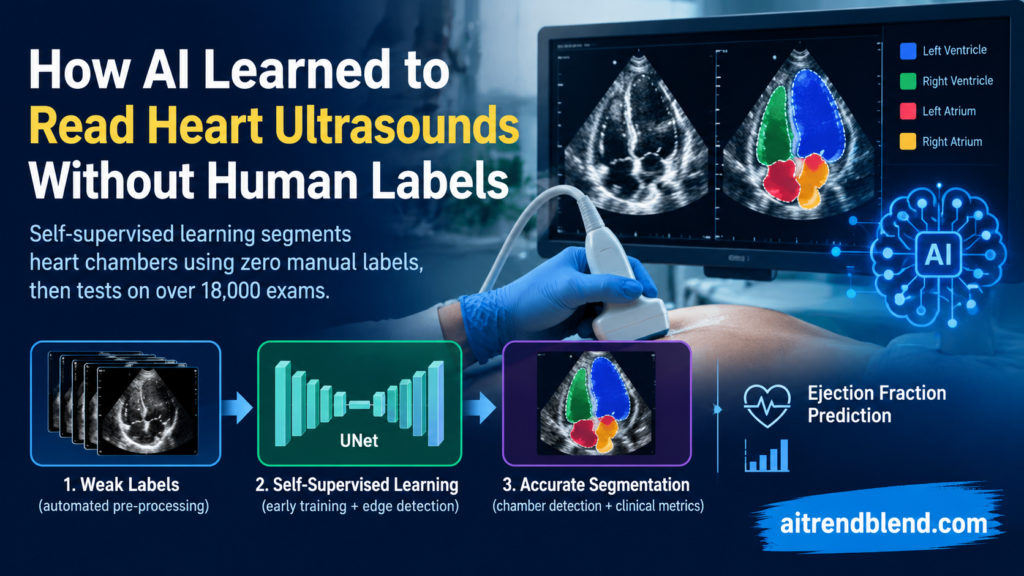
Every echocardiogram report that lists an ejection fraction, a chamber volume, or a wall thickness represents a human being drawing a line around a moving, low contrast, occasionally noisy structure on ultrasound. Clinical guidelines from the American Society of Echocardiography…
Self Supervised Learning: How AI Learned to Read Heart Ultrasounds Without Human Labels Read More »
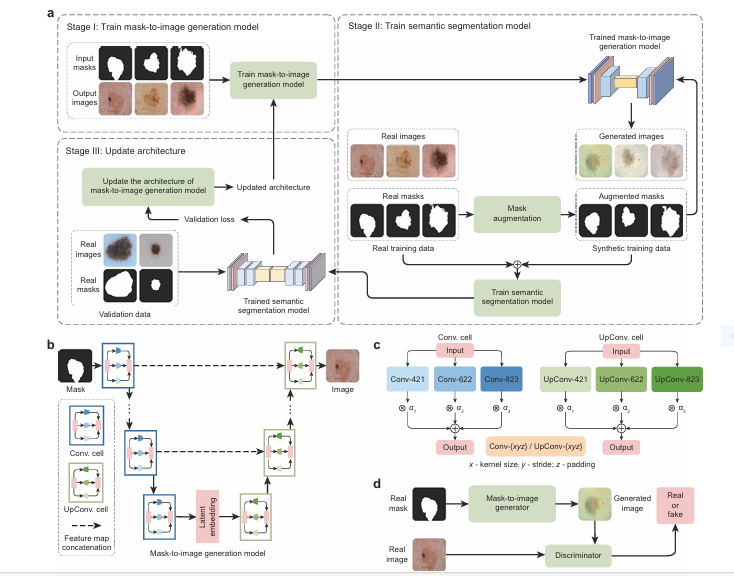
Deep learning segmentation models are, by now, quite good at their job when they have enough data to learn from. The actual constraint most teams run into is upstream of the model entirely, getting enough pixel level annotated examples to…
GenSeg And Training Medical AI With Barely Any Data Read More »
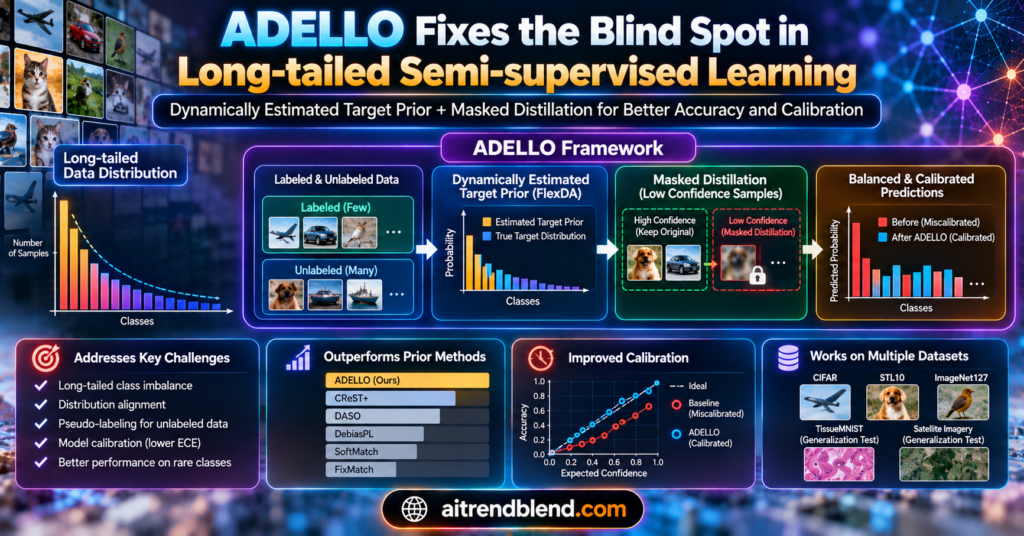
Semi-supervised learning exists to solve a specific, very common headache, that labeling data is expensive, so you want to train mostly on a small labeled set plus a much larger pool of unlabeled data. The standard playbook, popularized by a…
ADELLO Fixes the Blind Spot in Long-tailed Semi-supervised Learning Read More »
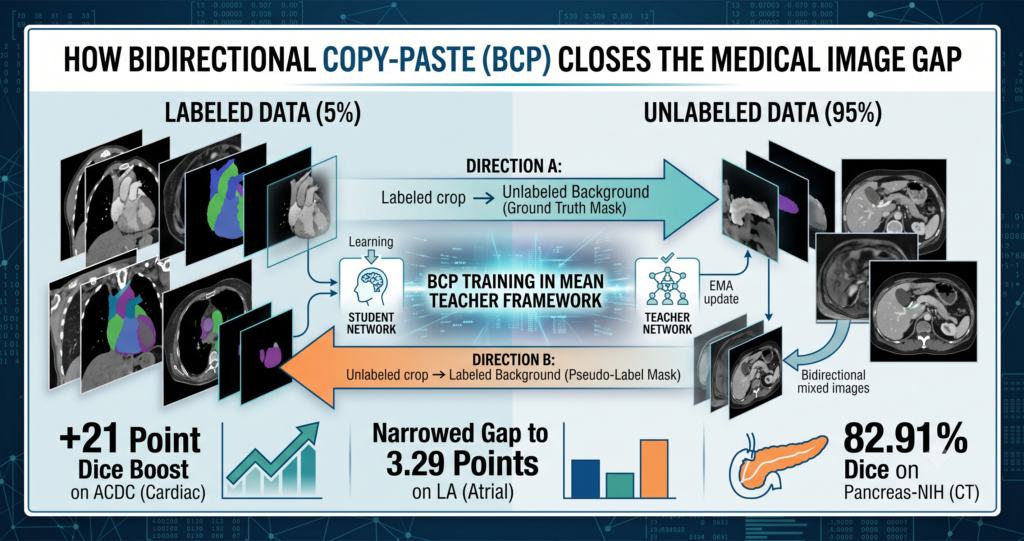
Segmenting the internal structures in a CT or MRI scan, tracing the exact outline of a heart chamber, an organ, or a tumor, is essential groundwork for a long list of clinical applications, and most of the strong supervised segmentation…
How Bidirectional Copy-Paste Closes the Labeled Unlabeled Gap Read More »
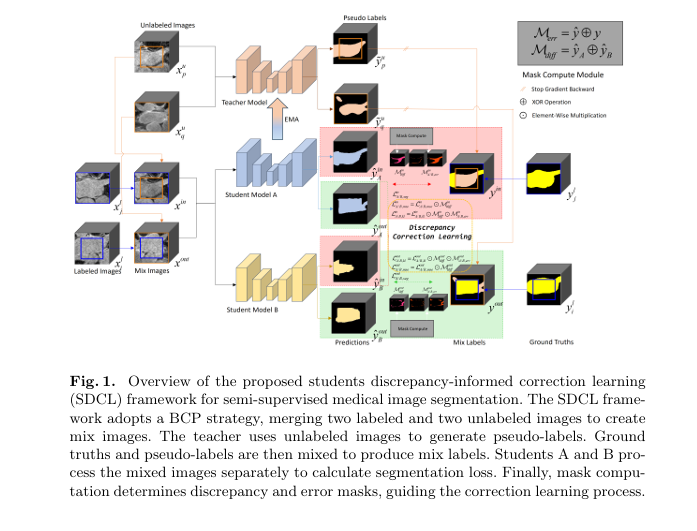
Medical image segmentation has a labeling problem that computer vision in general does not face nearly as badly. Drawing a box around a cat in a photo takes seconds. Tracing the exact boundary of a pancreas across dozens of CT…
SDCL: Two Students Learning From Each Other’s Mistakes Fix a Blind Spot in Segmentation Read More »
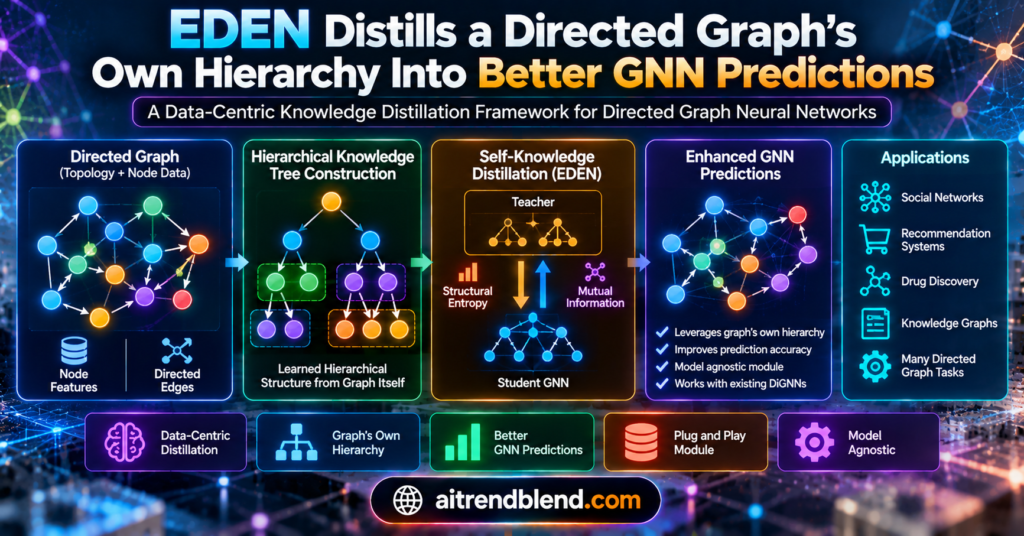
Graph neural networks have posted strong results on node classification, link prediction and graph level tasks for years now, but the field’s research energy has overwhelmingly gone into model architecture. New attention mechanisms, new convolution operators, new ways of combining…
EDEN Distills a Directed Graph’s Own Hierarchy Into Better GNN Predictions Read More »
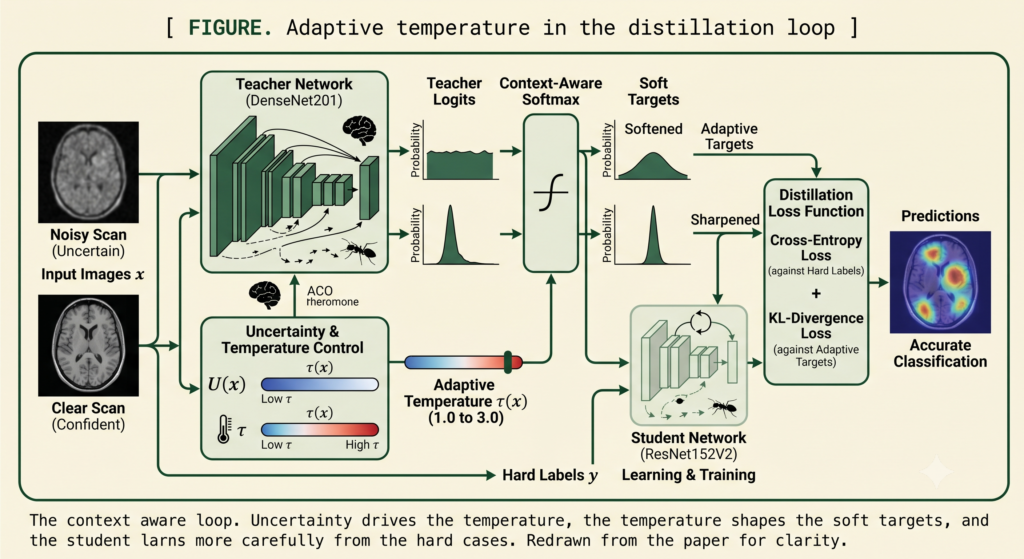
Two brain MRI scans arrive in the same batch. One is crisp, the tumor margin clean against healthy tissue, and any decent model would call it correctly. The other is smeared by motion, low in contrast, the boundary a guess.…
Context Aware Adaptive Knowledge Distillation for Tumor Detection Read More »
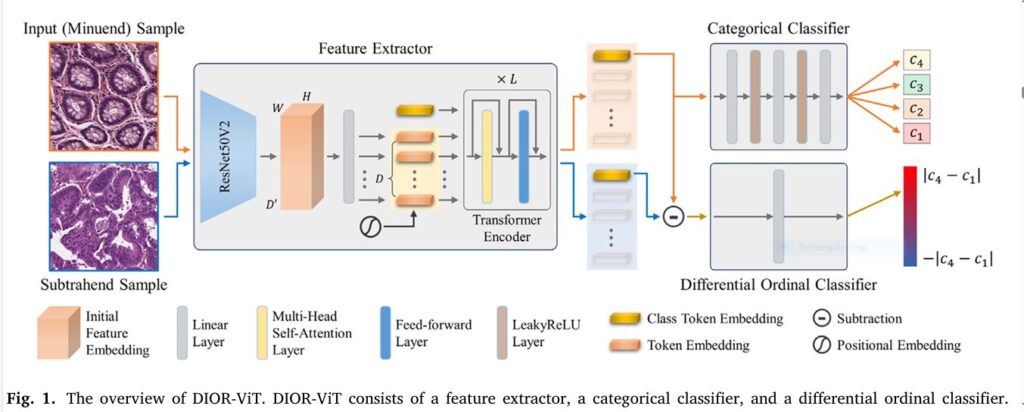
Most deep learning systems for cancer grading are trained the same way an image classifier is trained to tell cats from dogs. Each tissue patch gets a single label, benign, well differentiated, moderately differentiated or poorly differentiated, and the network…
DIOR-VIT: Vision Transformers Learn the Order of Cancer Grades Read More »
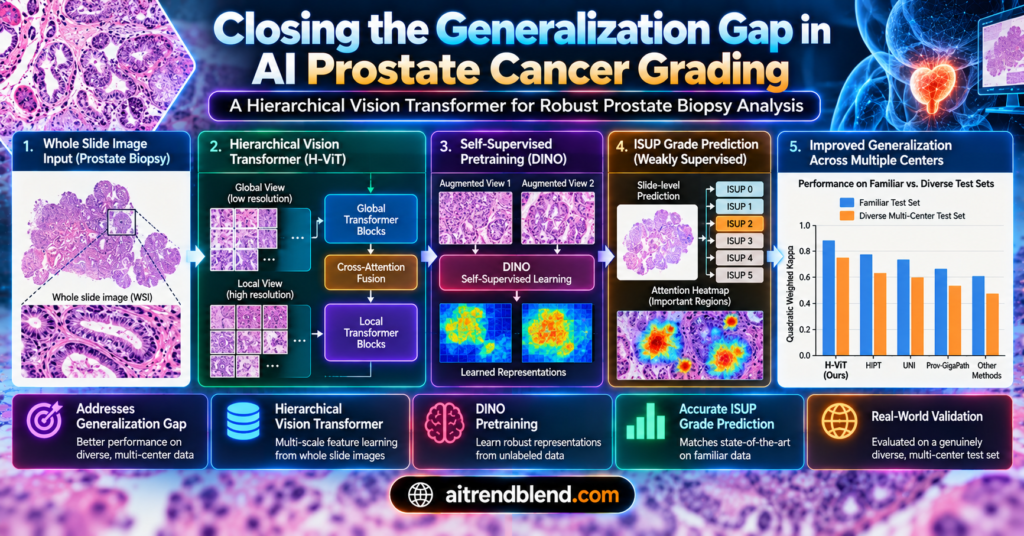
Prostate cancer is, by the paper’s own framing, the second most frequently diagnosed cancer and the fifth leading cause of cancer death among men worldwide. Grading how aggressive a tumor looks under the microscope, a task pathologists perform using a…