Medical image segmentation

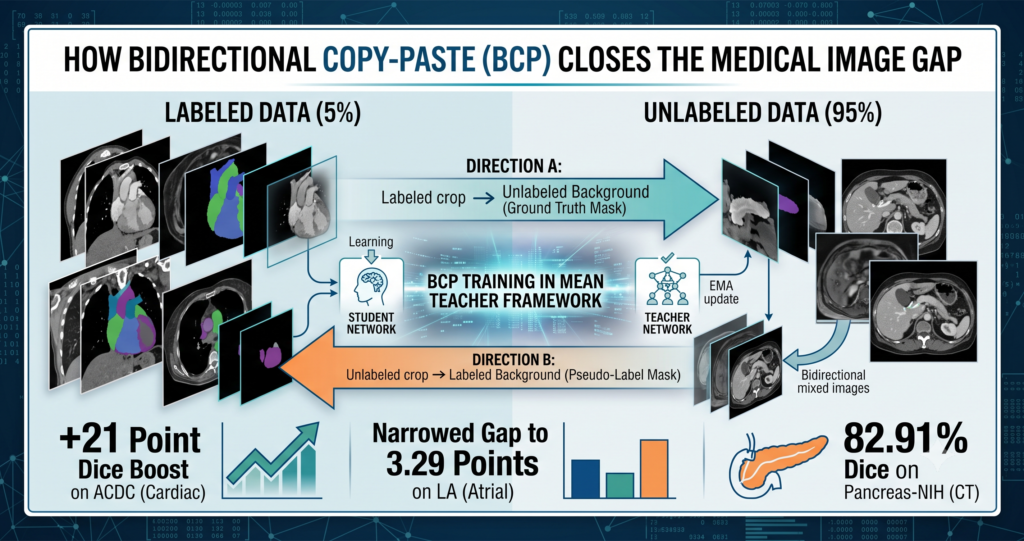
How Bidirectional Copy-Paste Closes the Labeled Unlabeled Gap

How Bidirectional Copy-Paste Closes the Labeled Unlabeled Gap

Analysis by the aitrendblend editorial team, filed under AI for Medical Imaging and Healthcare About a 17 minute read Semi Supervised Segmentation Mean Teacher Cardiac MRI Pancreatic CT Copy Paste Augmentation A copy paste blend between a labeled and an unlabeled scan, the core mechanism behind bidirectional copy paste segmentation A hospital research team has […]

How Bidirectional Copy-Paste Closes the Labeled Unlabeled Gap Read More »
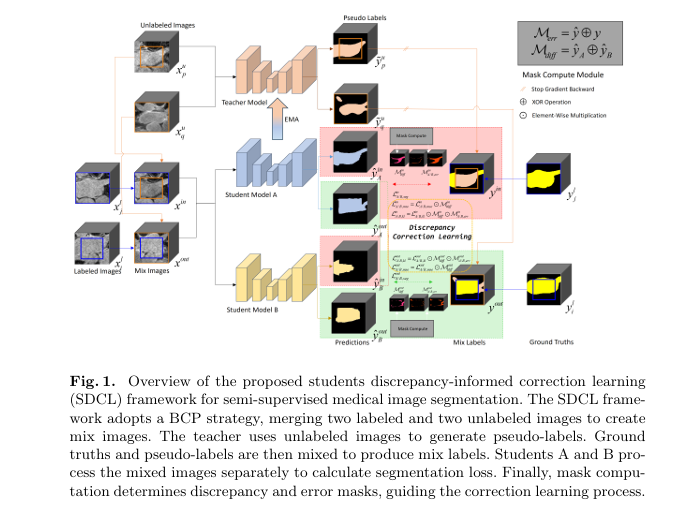
SDCL Framework for Semi-Supervised Medical Image Segmentation

SDCL: Two Students Learning From Each Other’s Mistakes Fix a Blind Spot in Segmentation

Analysis by the aitrendblend editorial team. Medical review by . Thirteen minute read. Source paper posted to arXiv, October 2024. Semi Supervised Segmentation Mean Teacher Pancreas CT Left Atrium MRI ACDC Cardiac MRI Pseudo Labels Correction Learning Ask two radiology residents to trace the same pancreas on the same CT slice and their outlines will

SDCL: Two Students Learning From Each Other’s Mistakes Fix a Blind Spot in Segmentation Read More »

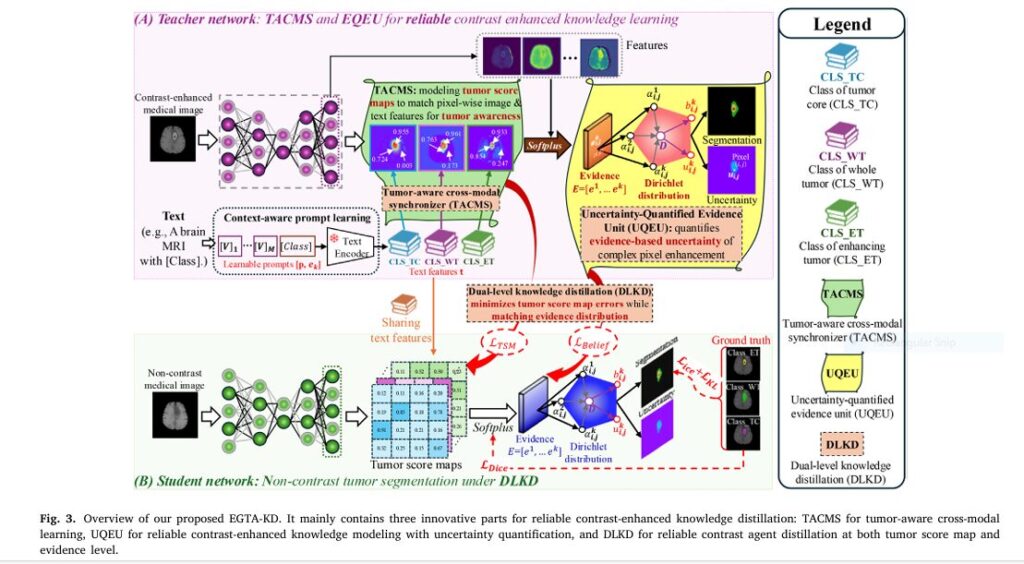
Medical AI transforming tumor segmentation with EGTA-KD technology

Revolutionary AI Breakthrough: Non-Contrast Tumor Segmentation Saves Lives & Avoids Deadly Risks

Imagine detecting deadly tumors without injecting risky contrast agents. A revolutionary AI framework called EGTA-KD is making this possible, achieving near-perfect segmentation (90.8% accuracy) on non-contrast scans while eliminating allergic reactions and kidney damage linked to traditional methods. This isn’t futuristic hype – it’s validated across brain, liver, and kidney tumors in major clinical datasets. The Deadly Cost of Current

Revolutionary AI Breakthrough: Non-Contrast Tumor Segmentation Saves Lives & Avoids Deadly Risks Read More »

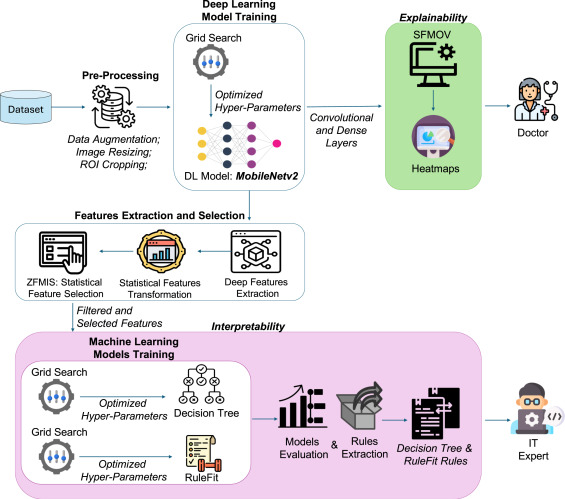
SVIS-RULEX SFMOV heatmap overlay on a chest X-ray: Red/Orange areas highlight regions of high statistical significance (e.g., mean intensity, skewness, entropy) corresponding to COVID-19 lung opacities, validated by radiologists. Blue areas show less relevant tissue

3 Breakthroughs & 1 Warning: How Explainable AI SVIS-RULEX is Revolutionizing Medical Imaging (Finally!)

For years, artificial intelligence (AI) has promised to revolutionize medical diagnosis, particularly in analyzing complex medical images like X-rays, MRIs, and ultrasounds. Deep learning models consistently achieve superhuman accuracy in spotting tumors, infections, and subtle pathologies. Yet, a critical roadblock remains: the “black box” problem. How does the AI really make its decision? Without transparency, doctors hesitate to

3 Breakthroughs & 1 Warning: How Explainable AI SVIS-RULEX is Revolutionizing Medical Imaging (Finally!) Read More »

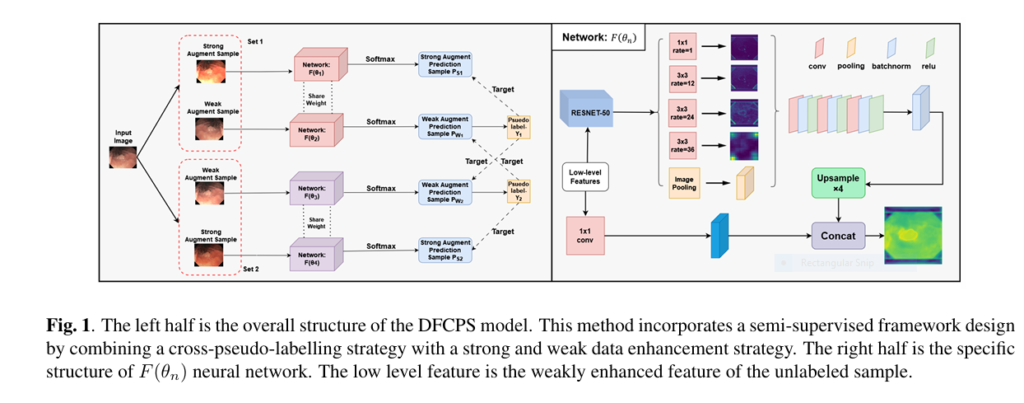
DFCPS AI model accurately segmenting gastrointestinal polyps in endoscopic imagery with minimal labeled data.

Revolutionizing Healthcare: How DFCPS’ Breakthrough Semi-Supervised Learning Slashes Medical Image Segmentation Costs by 90%

Medical imaging—CT scans, MRIs, and X-rays—generates vast amounts of data critical for diagnosing diseases like cancer, cardiovascular conditions, and gastrointestinal disorders. However, manual analysis is time-consuming, error-prone, and costly , leaving clinicians overwhelmed. Enter Deep Feature Collaborative Pseudo Supervision (DFCPS) , a groundbreaking semi-supervised learning model poised to transform medical image segmentation. In this article,

Revolutionizing Healthcare: How DFCPS’ Breakthrough Semi-Supervised Learning Slashes Medical Image Segmentation Costs by 90% Read More »

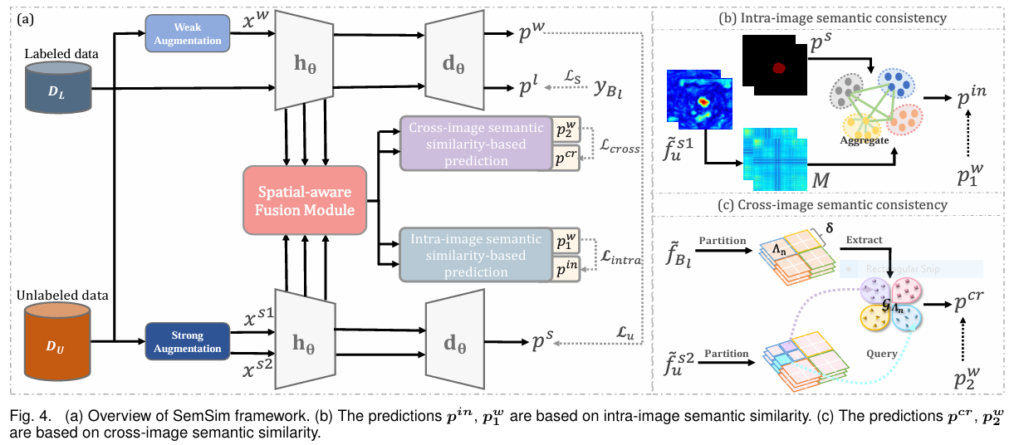
SemSim Adds Semantic Similarity to FixMatch Segmentation

Analysis by the aitrendblend editorial team, based on the published paper and an independent read of its claims. Not a substitute for advice from a licensed clinician or radiologist. Medical Imaging AI Semi Supervised Learning Cardiac MRI Segmentation Skin Lesion Segmentation Prostate MRI Segmentation SemSim rebuilds FixMatch around semantic similarity rather than raw pixel agreement,

SemSim Adds Semantic Similarity to FixMatch Segmentation Read More »

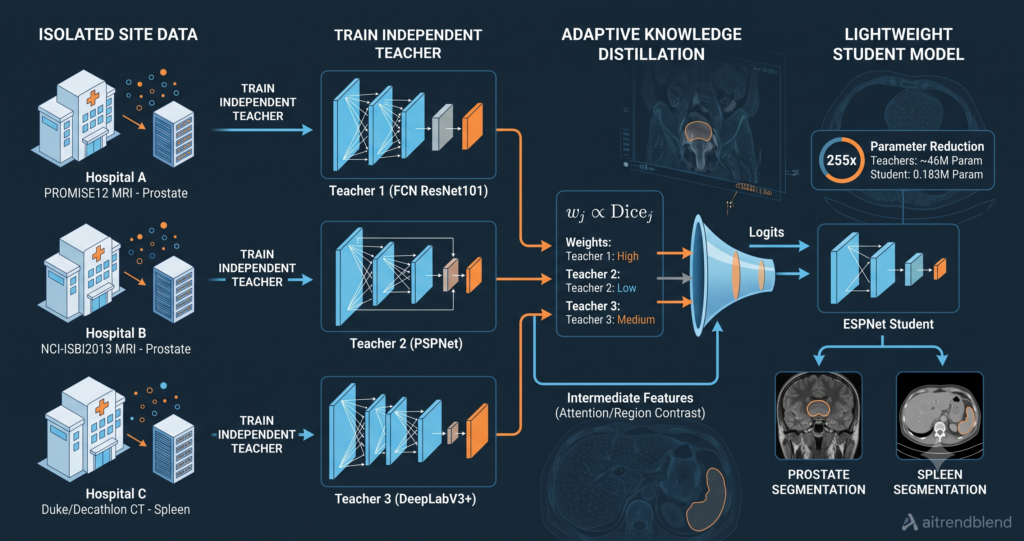
How Adaptive Multi-Teacher Knowledge Distillation Enables Lightweight Medical Segmentation with Limited Site Data.

How Adaptive Multi-Teacher Knowledge Distillation Enables Lightweight Medical Segmentation with Limited Site Data

Analysis by the aitrendblend editorial team. Published originally in Knowledge-Based Systems, volume 315, 2025, article 113196. Open access under a CC BY 4.0 license. Medical Imaging Knowledge Distillation MRI Segmentation CT Segmentation University Rovira i Virgili Adaptive multi-teacher distillation, separate hospital data into a single lightweight segmentation model Three hospitals, three teachers, zero shared patient

How Adaptive Multi-Teacher Knowledge Distillation Enables Lightweight Medical Segmentation with Limited Site Data Read More »

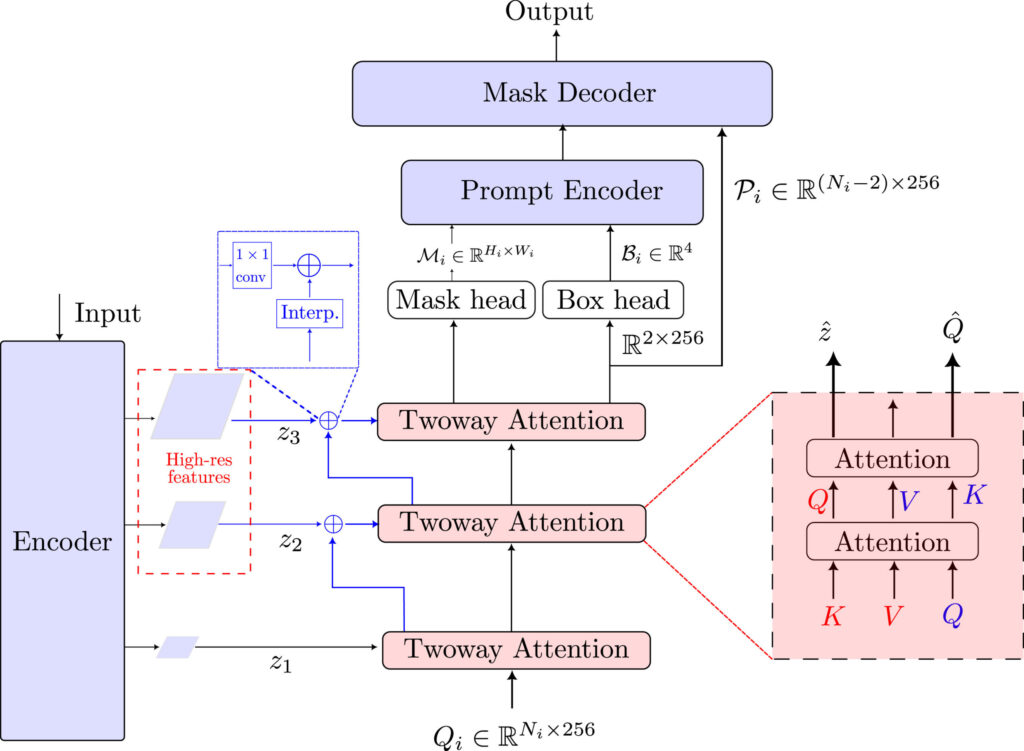
Sam2Rad architecture The Sam2Rad architecture incorporates a (hierarchical) two-way attention module to predict prompts for queried objects. Each object/class is represented by learnable queries . The Prompt Predictor Network (PPN) predicts bounding box coordinates of the target object , an intermediate mask prompt , and high-dimensional prompt embeddings . The prompt embeddings can represent various prompts suitable for the task, such as several point prompts or high-level semantic information. The predicted prompts (i.e., , , & ) are then fed to SAM’s mask decoder to generate the final segmentation mask. PPN also supports multi-class medical image segmentation by using class-specific queries .

Sam2Rad Explained: Teaching SAM2 to Prompt Itself on Ultrasound

AI FOR MEDICAL IMAGING AND HEALTHCARE · 15 MIN READ · Analysis by the aitrendblend editorial team· Sam2Rad Segment Anything Model SAM2 ultrasound prompt learning musculoskeletal imaging zero shot segmentation A bone outline traced automatically on an ultrasound frame. Image styling is illustrative of the pipeline described in the paper. Give the Segment Anything Model

Sam2Rad Explained: Teaching SAM2 to Prompt Itself on Ultrasound Read More »

3DL-Net’s three-stage architecture: preliminary segmentation, multi-scale context extraction, and dendritic refinement for precise medical image analysis.

Why 3DL-Net’s Dendritic Neurons Only Help When Paired With Its Pyramid Module

Analysis by the aitrendblend editorial team. Medical review pending, see. Ten minute read. Medical Imaging Segmentation Dendritic Learning Breast Ultrasound Ablation Study Segmentation masks from a breast ultrasound and a lung CT scan, the two imaging types 3DL-Net was tested on. A radiologist scrolling through a breast ultrasound exam is not looking for an average.

Why 3DL-Net’s Dendritic Neurons Only Help When Paired With Its Pyramid Module Read More »

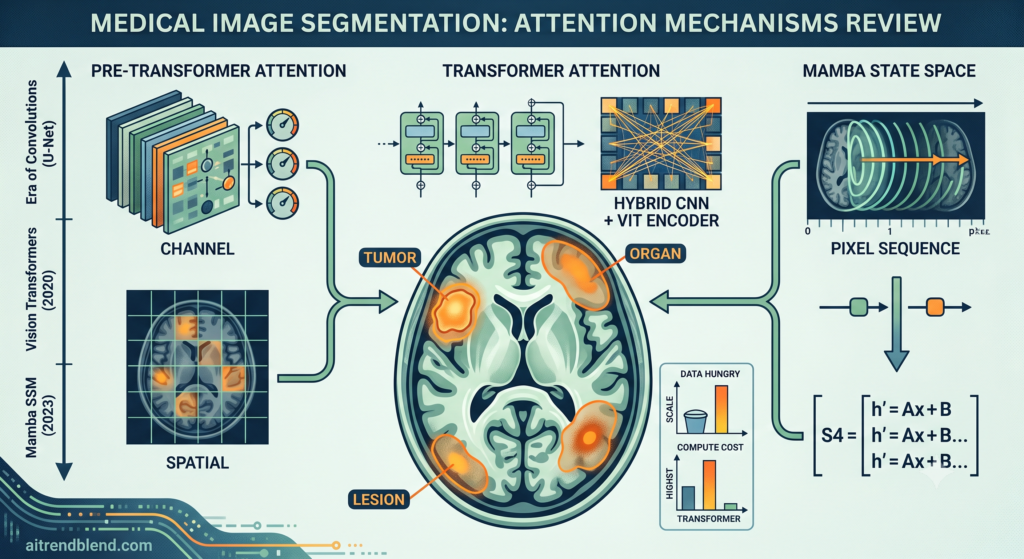
Attention Mechanisms Reshaping Medical Image Segmentation

Attention Mechanisms Reshaping Medical Image Segmentation

Analysis by the aitrendblend editorial team. 9 minute read. Medical Imaging AI Attention Mechanisms Vision Transformers Mamba State Space Models Segmentation A visual reference for how attention weighting highlights regions of interest during automated medical image segmentation. A radiologist scrolling through a stack of MRI slices at two in the morning does not have time

Attention Mechanisms Reshaping Medical Image Segmentation Read More »