Knowledge Distillation

Knowledge distillation is how a small, fast model learns to behave like a large, accurate one, keeping most of the quality while shedding the cost of running it. This category collects plain language breakdowns of the research that moves the field forward, from the classic KL divergence losses through newer token level and ranking based objectives. Every analysis explains the core idea, the math that makes it work, and the limitations the authors are honest about, and most ship with runnable code you can drop straight into your own training pipeline. It is built for practitioners who want to understand a method well enough to use it, not just cite it.

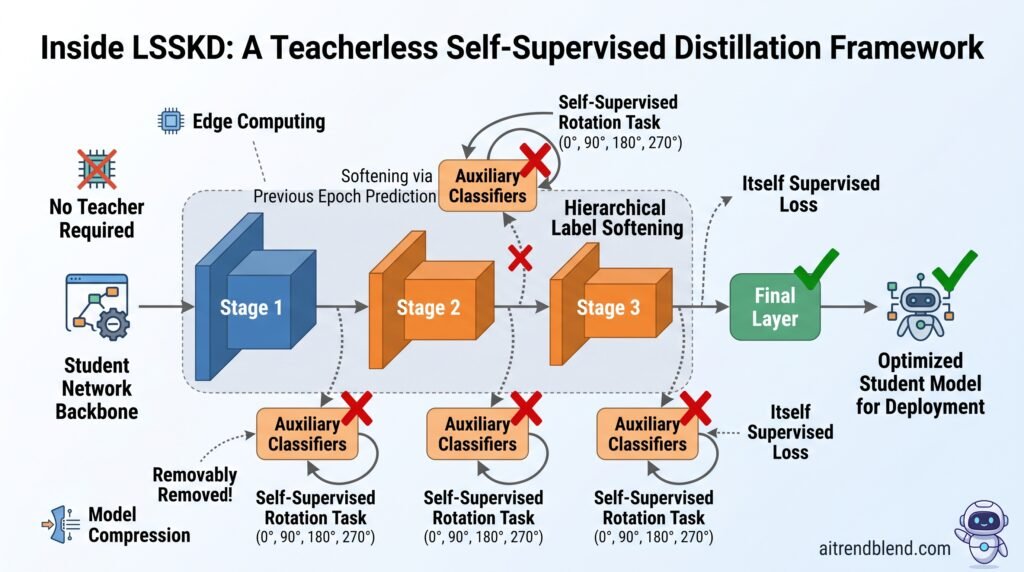
Inside LSSKD, a Self Supervised Distillation Framework That Trains Small Models Without a Teacher

Inside LSSKD, a Self Supervised Distillation Framework That Trains Small Models Without a Teacher

Knowledge distillation has a well known shape. Train a large, accurate teacher model. Train a small student model to mimic the teacher’s softened output probabilities, using the temperature trick Geoffrey Hinton popularized, rather than only the ground truth labels. The…

Inside LSSKD, a Self Supervised Distillation Framework That Trains Small Models Without a Teacher Read More »

Molecular dynamics simulation speed comparison using traditional vs. new knowledge distillation framework.

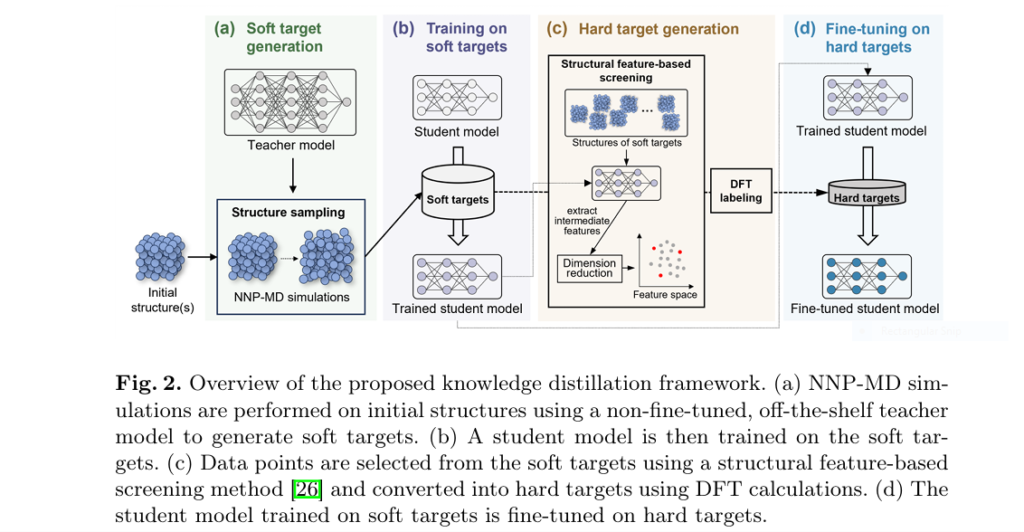
Knowledge Distillation: Why an Untuned Teacher Model Trains Better MD Potentials

Neural network potentials, NNPs for short, have become the go to tool for simulating how atoms move and interact without running full quantum mechanical calculations for every timestep. They learn the potential energy surface, essentially a map of how much…

Knowledge Distillation: Why an Untuned Teacher Model Trains Better MD Potentials Read More »