Knowledge Distillation

Knowledge distillation is how a small, fast model learns to behave like a large, accurate one, keeping most of the quality while shedding the cost of running it. This category collects plain language breakdowns of the research that moves the field forward, from the classic KL divergence losses through newer token level and ranking based objectives. Every analysis explains the core idea, the math that makes it work, and the limitations the authors are honest about, and most ship with runnable code you can drop straight into your own training pipeline. It is built for practitioners who want to understand a method well enough to use it, not just cite it.

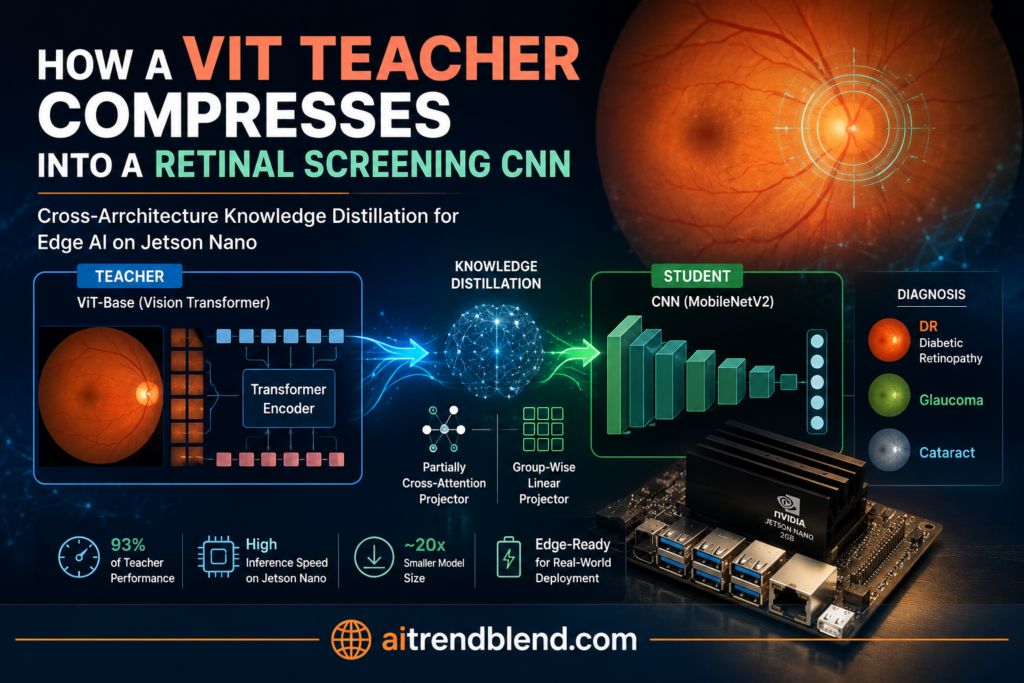
How A ViT Teacher Compresses Into A Retinal Screening CNN

How A ViT Teacher Compresses Into A Retinal Screening CNN (with -80% Fewer Parameters for 3 Diseases)

The source document behind this article is a graduate course project report from Columbia University’s ECS E6692, Deep Learning on the Edge, not a peer reviewed clinical study, and it has not been evaluated by a medical regulatory body. It…
How A ViT Teacher Compresses Into A Retinal Screening CNN (with -80% Fewer Parameters for 3 Diseases) Read More »

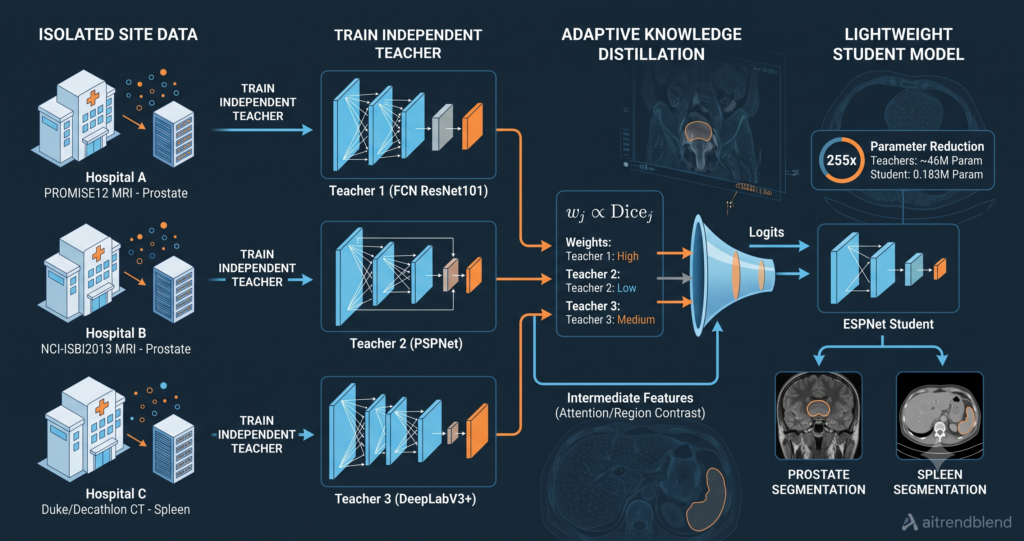
How Adaptive Multi-Teacher Knowledge Distillation Enables Lightweight Medical Segmentation with Limited Site Data.

How Adaptive Multi-Teacher Knowledge Distillation Enables Lightweight Medical Segmentation with Limited Site Data

A model trained to segment the prostate in MRI scans from one institution routinely fails when presented with scans from another hospital that uses a different scanner, a different field strength, or a different slice thickness. This is not a…

How Adaptive Multi-Teacher Knowledge Distillation Enables Lightweight Medical Segmentation with Limited Site Data Read More »