Image Segmentation

Image segmentation is the task of labeling an image at the pixel level, and it underpins much of modern medical imaging, autonomous perception, and scene understanding. Here we break down segmentation architectures, loss functions, and evaluation practices, with frequent attention to the medical settings where boundary accuracy and robustness matter most. Each piece traces the method back to its source research.

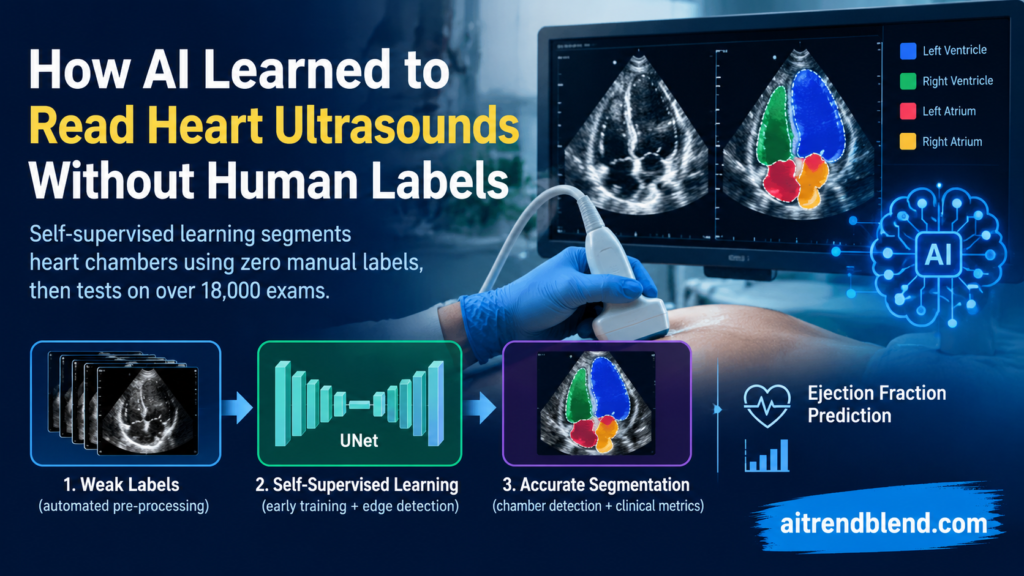
Self Supervised Learning: How AI Learned to Read Heart Ultrasounds Without Human Labels

Self Supervised Learning: How AI Learned to Read Heart Ultrasounds Without Human Labels

Every echocardiogram report that lists an ejection fraction, a chamber volume, or a wall thickness represents a human being drawing a line around a moving, low contrast, occasionally noisy structure on ultrasound. Clinical guidelines from the American Society of Echocardiography…

Self Supervised Learning: How AI Learned to Read Heart Ultrasounds Without Human Labels Read More »

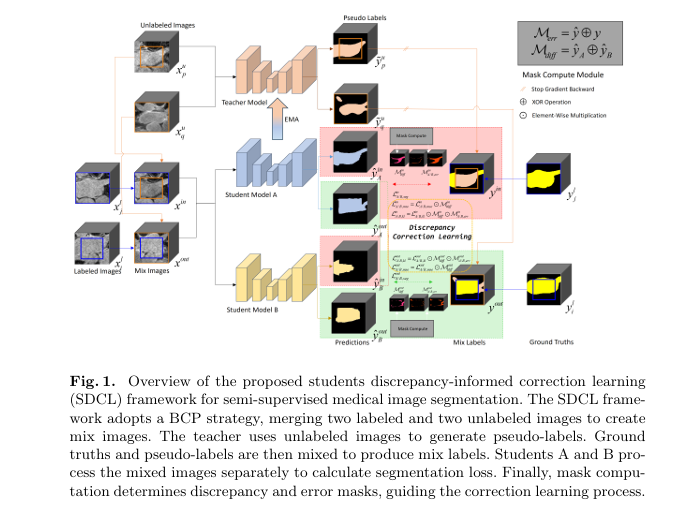
SDCL Framework for Semi-Supervised Medical Image Segmentation

SDCL: Two Students Learning From Each Other’s Mistakes Fix a Blind Spot in Segmentation

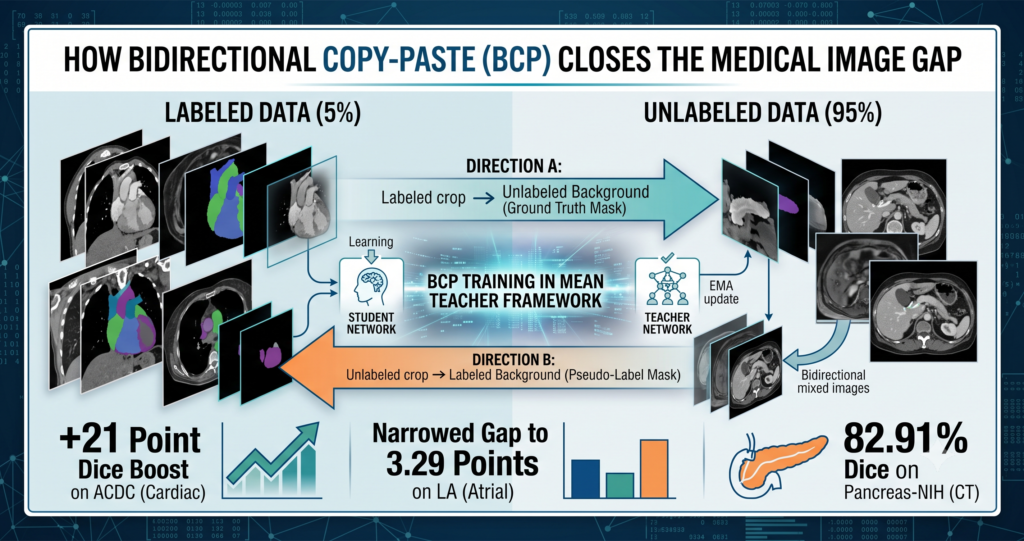
Medical image segmentation has a labeling problem that computer vision in general does not face nearly as badly. Drawing a box around a cat in a photo takes seconds. Tracing the exact boundary of a pancreas across dozens of CT…

SDCL: Two Students Learning From Each Other’s Mistakes Fix a Blind Spot in Segmentation Read More »

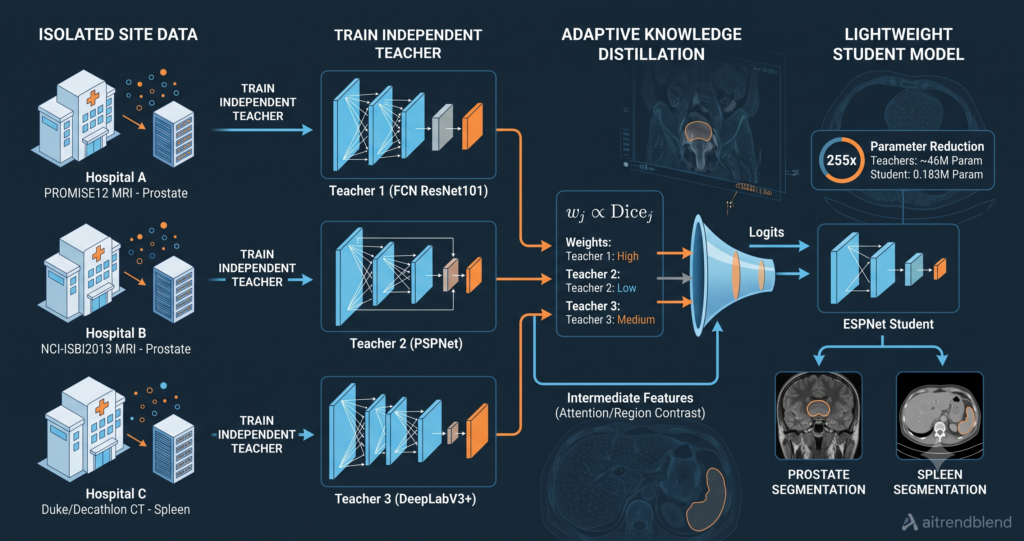
How Adaptive Multi-Teacher Knowledge Distillation Enables Lightweight Medical Segmentation with Limited Site Data.

How Adaptive Multi-Teacher Knowledge Distillation Enables Lightweight Medical Segmentation with Limited Site Data

A model trained to segment the prostate in MRI scans from one institution routinely fails when presented with scans from another hospital that uses a different scanner, a different field strength, or a different slice thickness. This is not a…

How Adaptive Multi-Teacher Knowledge Distillation Enables Lightweight Medical Segmentation with Limited Site Data Read More »