Medical AI

Medical AI brings together our reporting on machine learning for clinical and biomedical problems, from diagnosis and prognosis to medical image analysis and decision support. Because mistakes in this domain carry a human cost, we pay close attention to evaluation, calibration, uncertainty, and the gap between benchmark numbers and bedside reliability. Expect grounded explainers of recent research rather than uncritical product announcements.

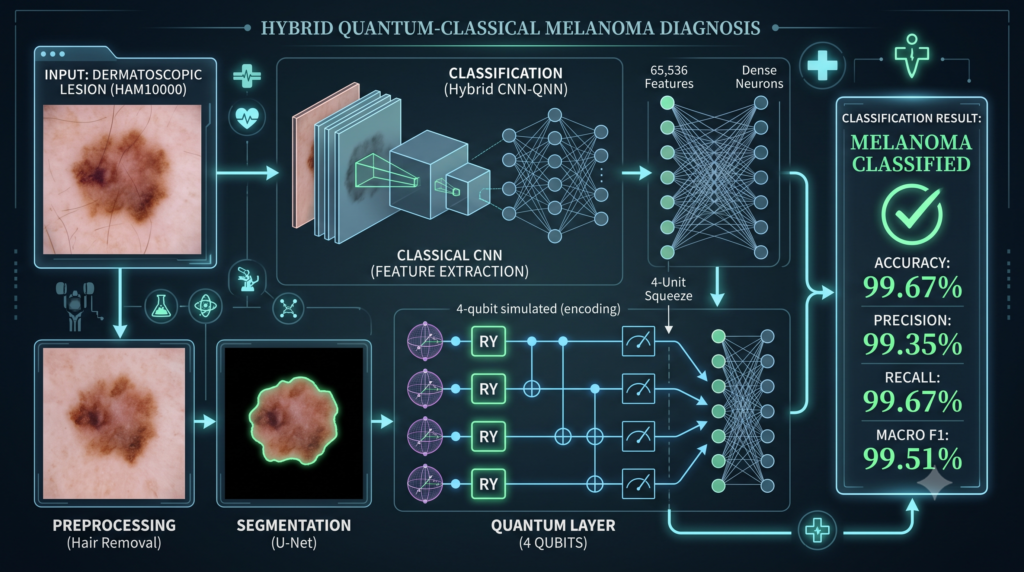
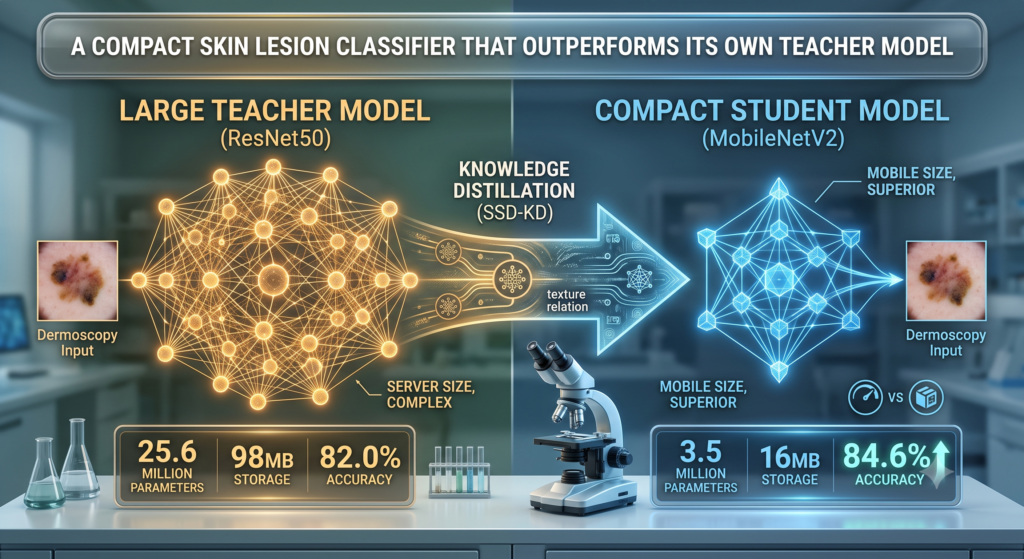
SSD-KD: A Compact Skin Lesion Classifier That Outperforms Its Own Teacher Model

SSD-KD: A Compact Skin Lesion Classifier That Outperforms Its Own Teacher Model

Skin cancer detection has become one of the clearer success stories for deep learning in medicine, with models trained on large dermoscopy image collections repeatedly matching or approaching dermatologist level accuracy on benchmark datasets. The catch is that the models…

SSD-KD: A Compact Skin Lesion Classifier That Outperforms Its Own Teacher Model Read More »

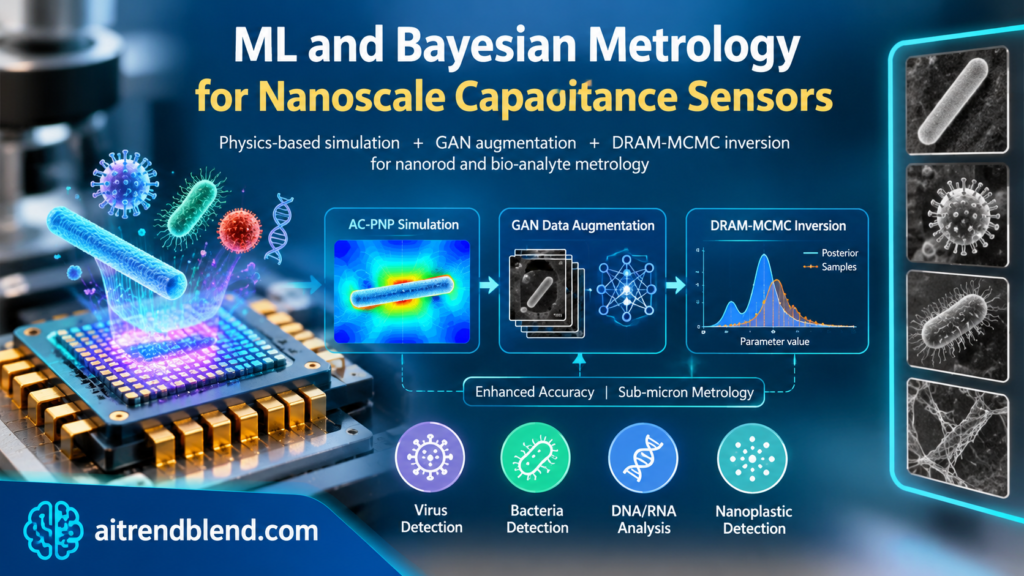
ML and Bayesian Metrology for Nanoscale Capacitance Sensors

ML and Bayesian Metrology for Nanoscale Capacitance Sensors

Inside a microfluidic chamber sealed atop a 90-nanometer CMOS biochip, an elongated nanoscale particle—a 300-nanometer nanoplastic fiber, a rod-shaped bacteriophage, or a double-stranded nucleic acid bundle—drifts in a 100-millimolar saline solution just 40 nanometers above a grid of gold-copper nanoelectrodes.…

ML and Bayesian Metrology for Nanoscale Capacitance Sensors Read More »

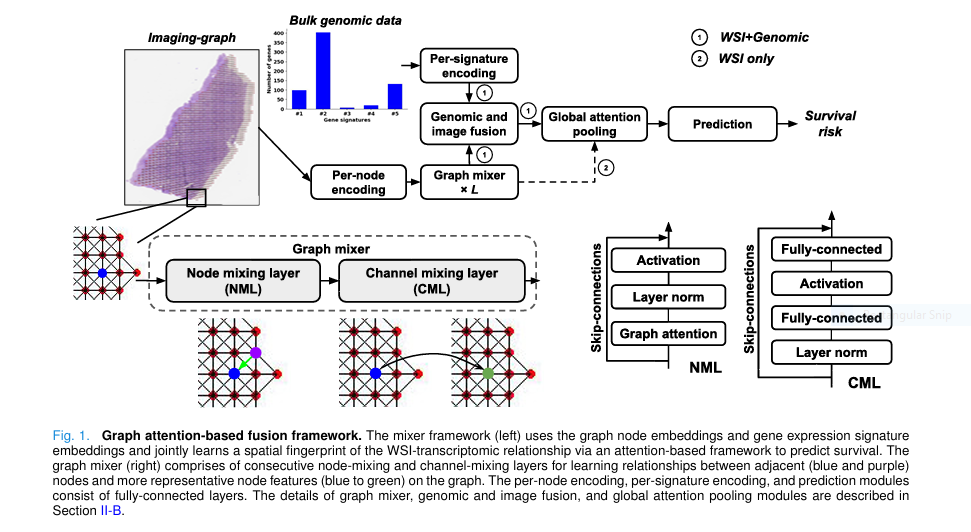
Graph Attention Model for Cancer Survival Prediction

Graph Attention Fusion of Pathology Images and Gene Expression Predicts Cancer Survival

Predicting how a cancer patient’s disease will progress from a combination of pathology images and molecular data is a well established goal in computational pathology. The typical approach processes the whole slide image through one pipeline, processes the gene expression…

Graph Attention Fusion of Pathology Images and Gene Expression Predicts Cancer Survival Read More »